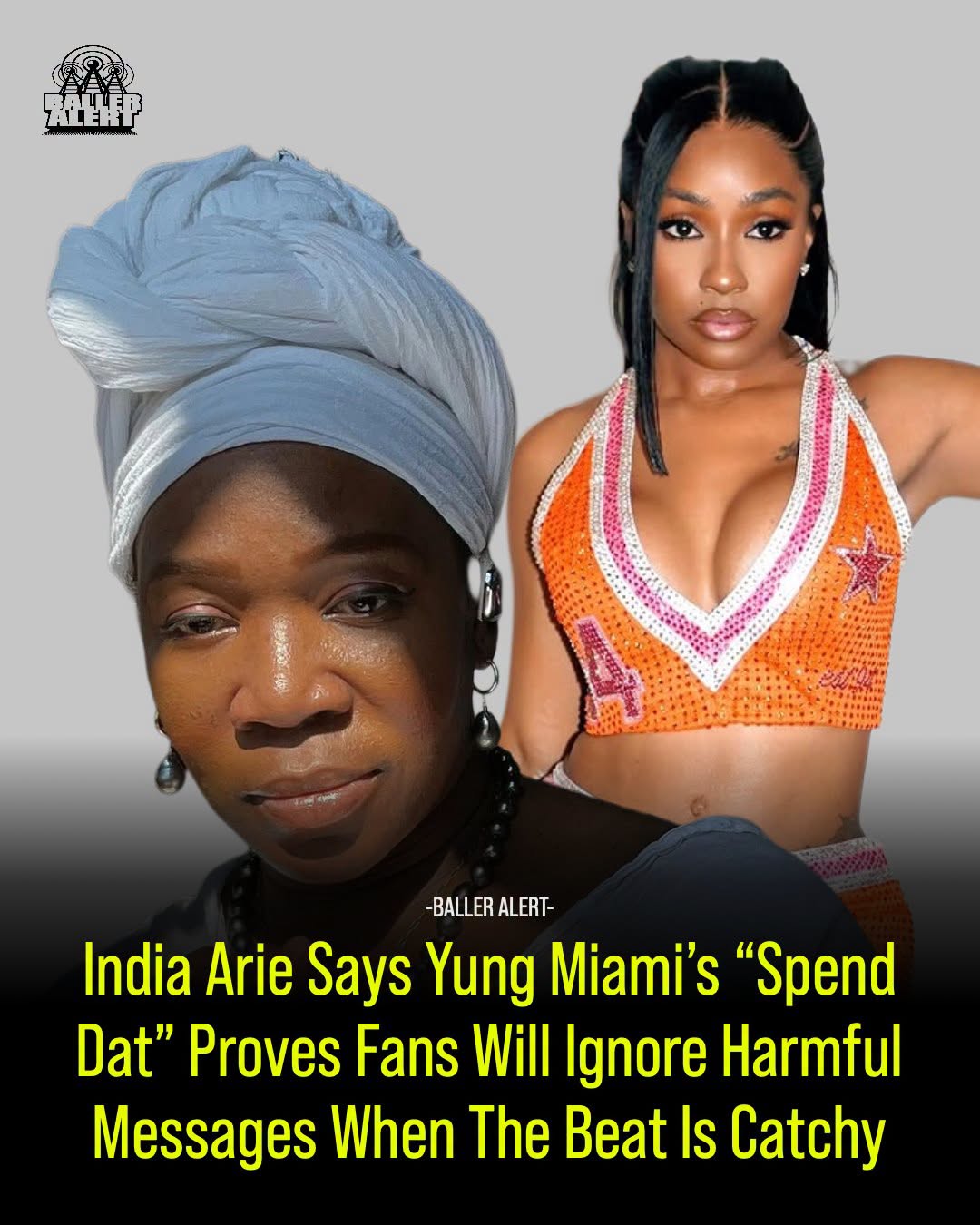
India Arie Questions the Success of Yung Miami’s “Spend Dat,” Igniting Debate on Music and Cultural Influence
Singer-songwriter India Arie has sparked widespread discussion after questioning the popularity of Yung Miami’s track “Spend Dat.” While acknowledging the song’s infectious appeal, Arie argued that its commercial success raises deeper questions about the kinds of messages audiences are willing to embrace when they are delivered through catchy music.
According to Arie, the issue extends beyond a single song. She suggested that the widespread acceptance of lyrics centered on materialism and transactional relationships reflects a broader cultural trend in which entertainment value can overshadow the substance of a song’s message. Her comments have prompted conversations about the role music plays in shaping values and whether consumers should be more mindful of the content they celebrate.
The remarks quickly drew mixed reactions across social media. Some users agreed with Arie’s perspective, praising her for encouraging thoughtful discussions about the influence of popular culture. Others defended Yung Miami, arguing that music often serves as artistic expression or entertainment rather than a moral guide, and that listeners are capable of distinguishing between art and real-life values.
The debate has also reignited longstanding questions about artistic freedom and personal responsibility. Critics of Arie’s stance argue that artists should not be expected to act as role models and that creative expression should not be judged solely by its social impact. Supporters, however, contend that highly influential music inevitably shapes conversations, attitudes, and cultural norms, making discussions about lyrical content both relevant and necessary.
As the conversation continues, it highlights a recurring tension within the entertainment industry: the balance between commercial success, artistic expression, and cultural responsibility. Whether one agrees with India Arie’s concerns or sides with defenders of Yung Miami’s artistic freedom, the discussion underscores the powerful role music continues to play in influencing public discourse and reflecting society’s evolving values.