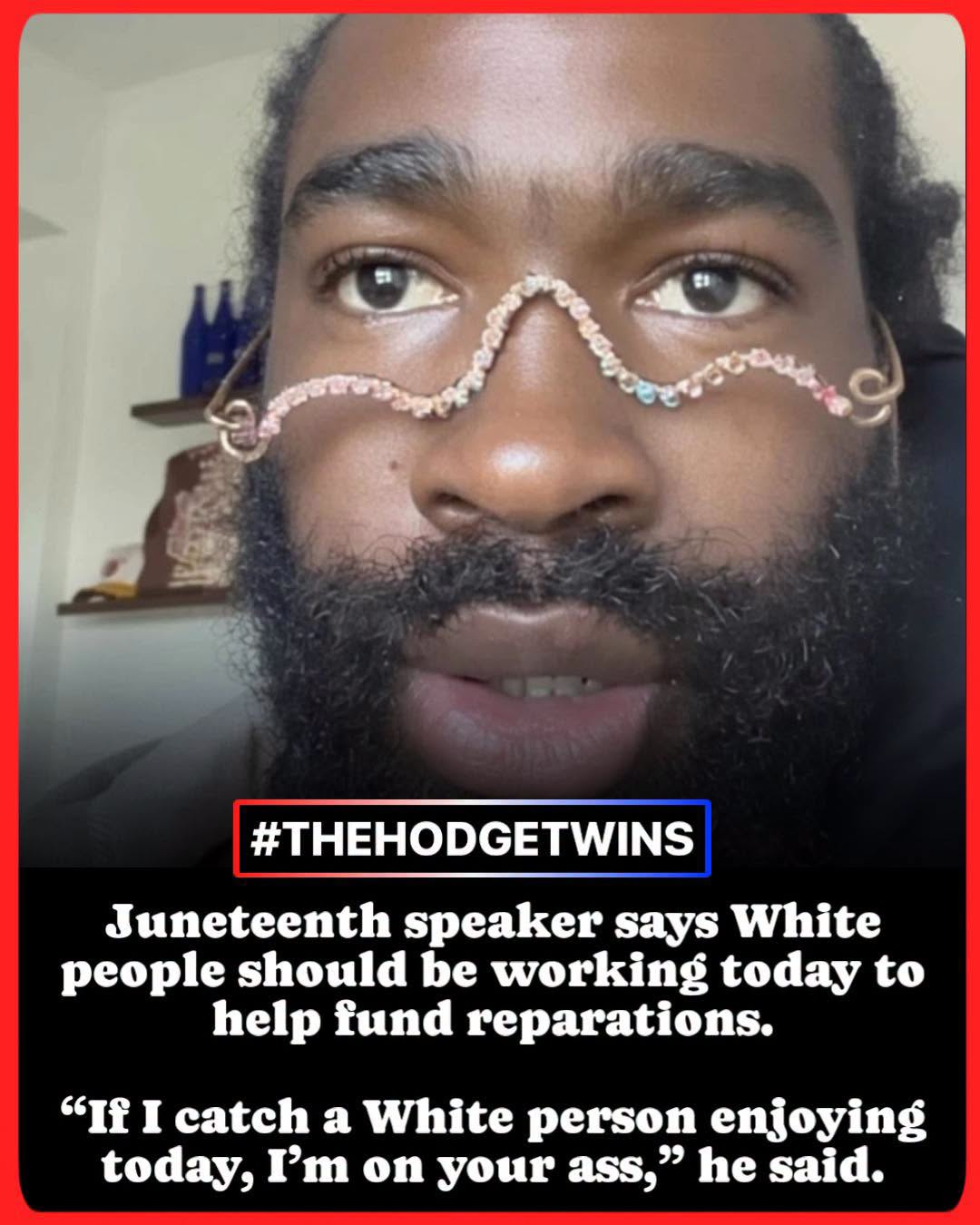
Juneteenth Speaker Sparks Controversy With Remarks About Reparations and White Americans
Comments made during a Juneteenth event have ignited debate online after a speaker suggested that White Americans should spend the holiday working to help fund reparations rather than celebrating.
During his remarks, the speaker argued that Juneteenth should be viewed not only as a celebration of emancipation but also as a reminder of the lasting economic and social consequences of slavery. He stated that White Americans should be using the day to contribute toward reparations efforts, adding, “If I catch a White person enjoying today, I’m on your ass.”
Video clips of the speech quickly circulated across social media, drawing both criticism and support.
Supporters of the speaker’s message argued that the comments were intended as provocative political rhetoric designed to highlight ongoing discussions about racial inequality and reparations. They contended that Juneteenth commemorates the end of slavery in the United States and provides an opportunity to examine the nation’s historical legacy and its continuing effects.
Critics, however, described the remarks as divisive and racially inflammatory. Many argued that singling out individuals based on race undermines efforts to promote unity and mutual understanding. Some commentators accused the speaker of replacing one form of racial prejudice with another.
The controversy also reignited broader debates over reparations, a policy proposal that has been discussed for decades. Advocates argue that reparations could help address economic disparities rooted in slavery and discriminatory policies that followed emancipation. Opponents contend that modern individuals should not be held financially responsible for historical injustices committed by previous generations.
Juneteenth, officially recognized as a U.S. federal holiday in 2021, commemorates June 19, 1865, when enslaved people in Texas learned of their freedom more than two years after the issuance of the Emancipation Proclamation. The holiday has increasingly become both a celebration of freedom and a platform for discussions about race, history, and public policy.
As reactions continue online, the speaker’s comments have become the latest example of how conversations surrounding race, historical accountability, and reparations remain among the most contentious issues in American public life.